



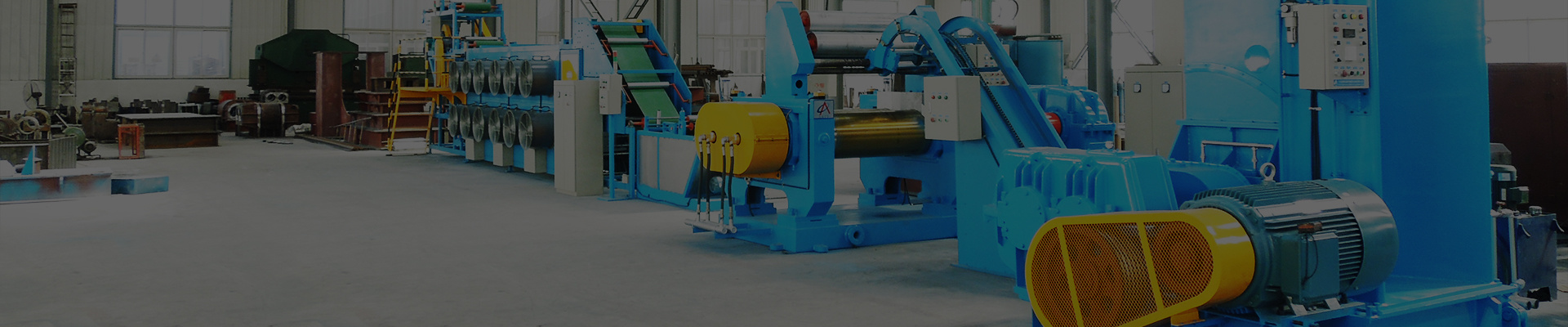
Unleashing the Power of Mixing Chambers: Enhancing Efficiency and Performance
Time of issue:
2023-12-03
Table of Contents: 1. Introduction 2. Understanding Mixing Chambers 3. Importance of Efficient Mixing 4. Advantages of Mixing Chambers 5. Types of Mixing Chambers 6. Key Factors for Optimal Performance 7. Advanced Techniques for Enhanced Efficiency 8. Frequently Asked Questions (FAQs) 9. Conclusion 1. Introduction Efficiency and performance are crucial aspects of any manufacturing process. As tech
1. Introduction
2. Understanding Mixing Chambers
3. Importance of Efficient Mixing
4. Advantages of Mixing Chambers
5. Types of Mixing Chambers
6. Key Factors for Optimal Performance
7. Advanced Techniques for Enhanced Efficiency
8. Frequently Asked Questions (FAQs)
9. Conclusion
1. Introduction
Efficiency and performance are crucial aspects of any manufacturing process. As technology advances, so does the need for innovative solutions to maximize production outputs. This article will focus on the power of mixing chambers and how they can revolutionize your manufacturing operations.
2. Understanding Mixing Chambers
A mixing chamber is a vital component in the manufacturing of processing machinery. It is designed to blend different substances, ensuring a homogeneous mixture for further processing. By controlling the flow and interaction of materials, mixing chambers play a pivotal role in achieving consistent results.
2.1 Importance of Efficient Mixing
Effective mixing is essential for optimizing product quality, reducing waste, and enhancing overall efficiency. A well-designed mixing chamber enables thorough blending, ensuring uniform distribution of particles and minimizing segregation. This results in improved product consistency and reduced production costs.
3. Advantages of Mixing Chambers
Mixing chambers offer numerous advantages for manufacturers seeking to streamline their operations. These include:
3.1 Enhanced Product Quality
By efficiently blending materials, mixing chambers contribute to the production of high-quality products. Homogeneous mixtures eliminate inconsistencies and ensure that each batch meets the desired specifications.
3.2 Increased Production Efficiency
Efficient mixing chambers enable faster and more precise blending, leading to increased production rates. With reduced processing times, manufacturers can meet customer demands while minimizing downtime.
3.3 Cost Savings
Optimal mixing reduces material waste and enhances resource utilization, resulting in significant cost savings. By minimizing the need for rework and maximizing raw material efficiency, manufacturers can improve their bottom line.
4. Types of Mixing Chambers
Mixing chambers come in various designs, each tailored to specific manufacturing requirements. Some common types include:
4.1 Static Mixing Chambers
Static mixing chambers utilize stationary elements to blend materials. This design is ideal for continuous processes and is known for its simplicity and reliability.
4.2 Dynamic Mixing Chambers
Dynamic mixing chambers employ moving components to achieve the desired blending effect. These chambers offer enhanced flexibility and are suitable for applications requiring adjustable mixing parameters.
4.3 Fluidic Mixing Chambers
Fluidic mixing chambers leverage fluid dynamics to achieve efficient blending. By utilizing the principles of flow control and pressure differentials, these chambers deliver precise mixing results.
5. Key Factors for Optimal Performance
To unleash the full potential of mixing chambers, certain factors must be considered:
5.1 Design and Geometry
The design and geometry of the mixing chamber greatly impact its performance. Factors such as chamber length, diameter, and the arrangement of mixing elements must be optimized to achieve the desired mixing results.
5.2 Material Properties
Understanding the properties of the materials being mixed is crucial. Viscosity, density, and particle size distribution influence the choice of mixing chamber and determine the optimal operating conditions.
5.3 Mixing Parameters
Adjusting mixing parameters, such as rotational speed, fluid flow rate, and residence time, allows manufacturers to fine-tune the mixing process. These parameters should be optimized to achieve the desired blending efficiency.
6. Advanced Techniques for Enhanced Efficiency
Innovation continues to drive improvements in mixing chamber technology. Here are some advanced techniques that can further enhance efficiency and performance:
6.1 Computational Fluid Dynamics (CFD)
CFD simulations enable manufacturers to analyze and optimize the mixing process digitally. By studying fluid flow patterns and identifying areas of improvement, CFD helps refine mixing chamber designs for superior performance.
6.2 Real-time Monitoring and Control
Implementing sensors and automation systems allows for real-time monitoring and control of the mixing process. This enables manufacturers to make immediate adjustments, ensuring consistent and efficient blending.
6.3 Multi-stage Mixing
For complex applications requiring precise control over multiple parameters, multi-stage mixing systems can be employed. This approach ensures thorough blending and guarantees product uniformity.
7. Frequently Asked Questions (FAQs)
FAQ 1: Why is efficient mixing crucial in manufacturing?
Efficient mixing ensures consistent product quality, reduces waste, and enhances overall production efficiency.
FAQ 2: How do mixing chambers contribute to cost savings?
Mixing chambers minimize material waste and optimize resource utilization, resulting in significant cost savings for manufacturers.
FAQ 3: What factors should be considered for optimal mixing chamber performance?
Key factors include design and geometry, material properties, and fine-tuning of mixing parameters.
FAQ 4: What are some advanced techniques for enhancing mixing chamber efficiency?
Advanced techniques include computational fluid dynamics (CFD), real-time monitoring and control, and multi-stage mixing.
FAQ 5: How can mixing chambers improve product consistency?
Mixing chambers ensure thorough blending, eliminating inconsistencies and ensuring uniform distribution of particles, resulting in improved product quality.
8. Conclusion
In conclusion, mixing chambers play a vital role in enhancing efficiency and performance in manufacturing processes. By understanding the fundamentals, exploring different types, and optimizing key factors, manufacturers can unlock the full potential of mixing chambers. Embracing advanced techniques further elevates productivity, ensuring a competitive edge in the market. Stay ahead of the competition by harnessing the power of mixing chambers and revolutionize your manufacturing operations.
Relevant Information
The Second Day of the Shanghai Exhibition
2025-09-18
The second day of the Greater Bay Area Expo
2025-05-16

ADD
Room 3718,No.9-1.Haifu Road,Dalian Free Trade Zone,China(Liaoning)Free Trade Pilot Area
PRODUCTS