



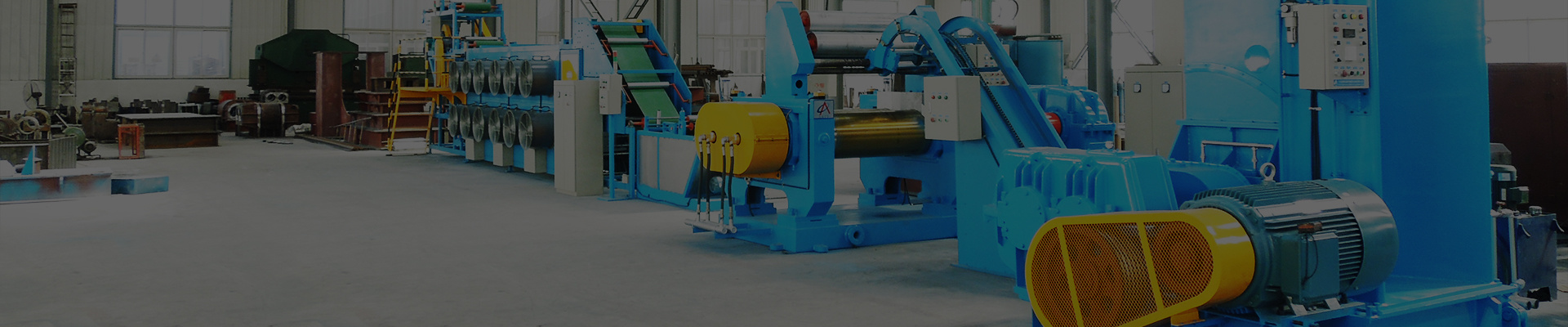
How Rubber Kneaders Improve Efficiency in Mixing Machinery
Time of issue:
2023-12-15
Table of Contents 1. Introduction: The significance of Rubber Kneaders in Mixing Machinery 2. Understanding Rubber Kneaders: How they work 3. Advantages of Rubber Kneaders in Mixing Machinery 3.1 Increased Production Efficiency 3.2 Enhanced Mixing Performance 3.3 Consistent Quality and Homogeneity 3.4 Reduced Processing Time and Energy Consumption 3.5 Improved Safety Measures 4. Int
1. Introduction: The significance of Rubber Kneaders in Mixing Machinery
2. Understanding Rubber Kneaders: How they work
3. Advantages of Rubber Kneaders in Mixing Machinery
3.1 Increased Production Efficiency
3.2 Enhanced Mixing Performance
3.3 Consistent Quality and Homogeneity
3.4 Reduced Processing Time and Energy Consumption
3.5 Improved Safety Measures
4. Integration of Rubber Kneaders in Manufacturing Processes
4.1 Rubber Compounding
4.2 Polymer Blending
4.3 Masterbatch Production
4.4 Specialty Rubber Processing
5. Frequently Asked Questions (FAQs)
5.1 How do Rubber Kneaders differ from traditional mixing methods?
5.2 Can Rubber Kneaders handle different types of rubber compounds?
5.3 Are Rubber Kneaders suitable for large-scale industrial applications?
5.4 What are the maintenance requirements for Rubber Kneaders?
5.5 How do Rubber Kneaders contribute to cost savings in the long run?
6. Conclusion: Harnessing the Power of Rubber Kneaders in Mixing Machinery
1. Introduction: The significance of Rubber Kneaders in Mixing Machinery
Rubber kneaders play a pivotal role in the manufacturing industry, specifically in the field of mixing machinery. These innovative machines have revolutionized the production of rubber compounds, ensuring superior quality and efficiency. By understanding the working principles and advantages of rubber kneaders, manufacturers can optimize their processes and stay ahead in the competitive market.
2. Understanding Rubber Kneaders: How they work
Rubber kneaders are specialized mixing machines that use a combination of mechanical and thermal energy to blend rubber compounds. They consist of a large, horizontally oriented chamber with counter-rotating blades. The rubber material is introduced into the chamber, and the blades continuously knead, mix, and shear the compound until it reaches the desired consistency.
3. Advantages of Rubber Kneaders in Mixing Machinery
3.1 Increased Production Efficiency
Rubber kneaders significantly improve production efficiency by reducing mixing time and enhancing the dispersion of additives. The continuous kneading action ensures thorough blending, resulting in faster processing and higher output. Manufacturers can meet customer demands promptly and efficiently.
3.2 Enhanced Mixing Performance
With their unique design and operating principles, rubber kneaders offer superior mixing performance compared to traditional methods. The blades' counter-rotating motion generates intense shear forces, allowing for better dispersion of materials and achieving a more homogeneous compound. This ensures consistent quality and minimizes batch variations.
3.3 Consistent Quality and Homogeneity
Rubber kneaders guarantee consistent quality and homogeneity in the mixing process. The precision and control they offer enable manufacturers to achieve uniform dispersion of additives, resulting in products with consistent physical properties. This is particularly crucial in industries where product uniformity and repeatability are paramount.
3.4 Reduced Processing Time and Energy Consumption
By optimizing the mixing process, rubber kneaders reduce both processing time and energy consumption. The efficient kneading action ensures faster compounding, thereby minimizing production cycles. Additionally, the improved dispersion of additives reduces the need for prolonged mixing, saving energy and lowering operational costs.
3.5 Improved Safety Measures
Rubber kneaders are equipped with advanced safety features that protect operators and prevent accidents. These machines come with interlocking mechanisms, emergency stops, and comprehensive safety protocols. Manufacturers can maintain a safe working environment while achieving high productivity levels.
4. Integration of Rubber Kneaders in Manufacturing Processes
4.1 Rubber Compounding
Rubber kneaders are extensively used in the rubber compounding process, where various ingredients are combined to create rubber compounds with specific properties. The precise control and efficiency offered by rubber kneaders ensure consistent compound quality, allowing manufacturers to deliver products that meet stringent specifications.
4.2 Polymer Blending
In polymer blending applications, rubber kneaders excel in creating homogeneous mixtures of multiple polymers. Whether it is for improving material properties or developing new formulations, rubber kneaders enable precise blending, resulting in superior performance and desired characteristics in the final product.
4.3 Masterbatch Production
Rubber kneaders are also utilized in the production of masterbatches, which are concentrated mixtures of additives and pigments. These masterbatches are then added to the base rubber compound during subsequent processing stages. The efficient dispersion achieved by rubber kneaders ensures uniform distribution of additives, enhancing the overall quality of the masterbatch and the final product.
4.4 Specialty Rubber Processing
Rubber kneaders have found significant applications in specialty rubber processing, such as the production of silicone rubber or high-performance elastomers. The precision and control offered by these machines are crucial in achieving the desired properties of specialty rubber compounds, meeting the requirements of niche industries.
5. Frequently Asked Questions (FAQs)
5.1 How do Rubber Kneaders differ from traditional mixing methods?
Unlike traditional mixing methods that rely on batch processing, rubber kneaders enable continuous mixing, resulting in improved efficiency and homogeneity. The counter-rotating blades in rubber kneaders generate intense shear forces, ensuring thorough blending and dispersion of materials.
5.2 Can Rubber Kneaders handle different types of rubber compounds?
Yes, rubber kneaders are designed to handle a wide range of rubber compounds, including natural rubber, synthetic rubber, and specialty elastomers. Their versatility and precision make them suitable for various applications and industry requirements.
5.3 Are Rubber Kneaders suitable for large-scale industrial applications?
Absolutely! Rubber kneaders are available in different sizes and configurations, catering to both small-scale and large-scale industrial applications. Manufacturers can choose the appropriate capacity and specifications based on their production requirements.
5.4 What are the maintenance requirements for Rubber Kneaders?
Rubber kneaders require regular maintenance to ensure optimal performance and longevity. This includes cleaning, lubrication, and periodic inspection of components. Manufacturers should follow the manufacturer's guidelines and consult with experts for routine maintenance and servicing.
5.5 How do Rubber Kneaders contribute to cost savings in the long run?
Rubber kneaders offer several cost-saving benefits in the long run. Their efficient mixing process reduces processing time, leading to increased productivity and faster turnaround times. Additionally, the improved dispersion of additives minimizes material waste, resulting in significant cost savings.
6. Conclusion: Harnessing the Power of Rubber Kneaders in Mixing Machinery
Rubber kneaders have emerged as game-changers in the field of mixing machinery. Their ability to enhance efficiency, improve mixing performance, ensure consistent quality, and reduce processing time has revolutionized rubber compound manufacturing. By integrating rubber kneaders into their processes, manufacturers can achieve superior results, outrank competitors, and meet the evolving demands of the industry. Embrace the power of rubber kneaders and unlock the potential of your mixing machinery.
Relevant Information
The Second Day of the Shanghai Exhibition
2025-09-18
The second day of the Greater Bay Area Expo
2025-05-16

ADD
Room 3718,No.9-1.Haifu Road,Dalian Free Trade Zone,China(Liaoning)Free Trade Pilot Area
PRODUCTS