



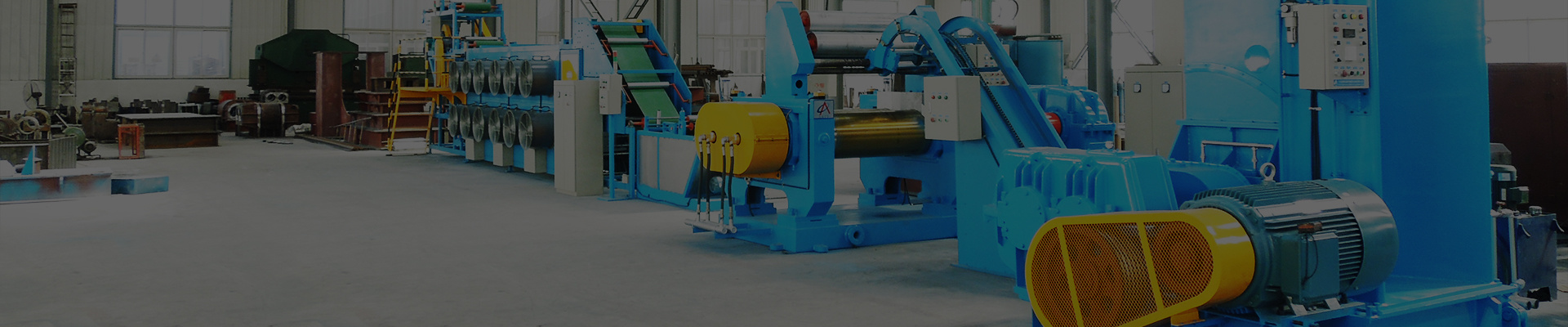
Unlocking the Potential of Customized Rubber Refiner Mills in Rubber Processing
Time of issue:
2025-01-17
Customized rubber refiner mills play a pivotal role in the rubber processing sector, particularly for manufacturers seeking to optimize their production processes
Customized rubber refiner mills play a pivotal role in the rubber processing sector, particularly for manufacturers seeking to optimize their production processes. These specialized machines are designed to refine and process rubber materials, ensuring that the final product meets specific quality standards and performance requirements. By tailoring the design and functionality of the rubber refiner mill to the unique needs of a production facility, companies can significantly improve their operational efficiency.
One of the primary functions of a customized rubber refiner mill is to break down the rubber compounds into finer particles. This process enhances the dispersion of filler materials, such as carbon black or silica, which are essential for improving the mechanical properties of rubber. When these materials are uniformly distributed within the rubber matrix, the resulting product exhibits superior strength, flexibility, and durability. Consequently, manufacturers can produce high-quality rubber products that are better suited for various applications, ranging from automotive tires to industrial goods.
In addition to improving product quality, customized rubber refiner mills can also contribute to energy efficiency in the manufacturing process. Modern mills are designed with advanced technologies that minimize energy consumption while maximizing output. This not only reduces operational costs but also aligns with the growing emphasis on sustainable manufacturing practices. By adopting energy-efficient equipment, companies can lower their carbon footprint, contributing to environmental conservation efforts.
Furthermore, the customization aspect of these mills allows manufacturers to adapt the equipment to specific production requirements. This flexibility can include adjustments in the mill's size, processing capacity, and even the materials used in its construction. Such tailored solutions enable companies to respond swiftly to market demands and changing consumer preferences, ensuring they remain competitive in a dynamic industry.
Another key advantage of using customized rubber refiner mills is the potential for enhanced safety features. When designing these mills, manufacturers can incorporate advanced safety mechanisms to protect operators and minimize the risk of accidents. This focus on safety not only complies with industry regulations but also fosters a safer working environment, which is crucial for maintaining employee morale and productivity.
In conclusion, customized rubber refiner mills are essential tools in the rubber processing industry. They not only enhance the quality of rubber products but also improve energy efficiency and operational safety. By investing in these specialized machines, manufacturers can achieve significant advancements in their production processes, ultimately leading to better products and increased profitability. As the rubber industry continues to evolve, the role of customized equipment will become even more critical in meeting the challenges of tomorrow's marketplace.
Relevant Information
The Second Day of the Shanghai Exhibition
2025-09-18
The second day of the Greater Bay Area Expo
2025-05-16

ADD
Room 3718,No.9-1.Haifu Road,Dalian Free Trade Zone,China(Liaoning)Free Trade Pilot Area
PRODUCTS