



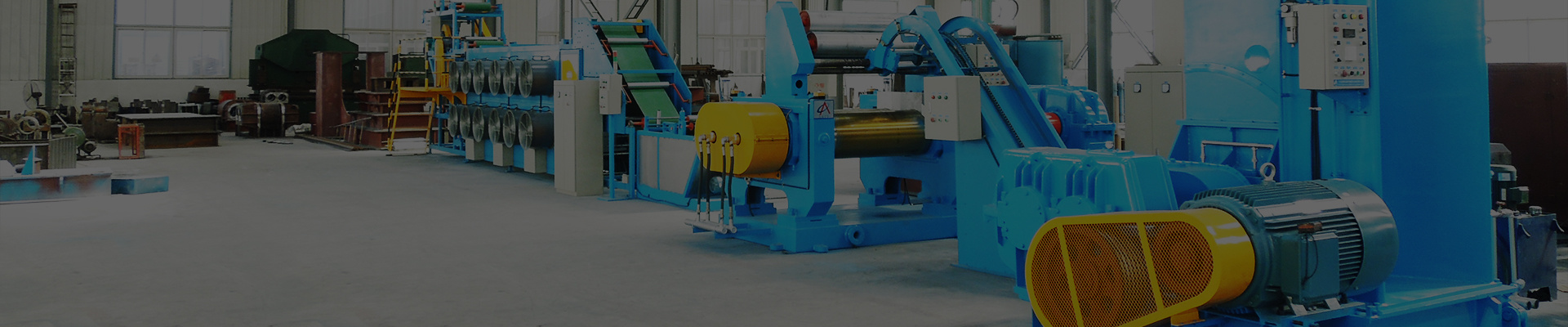
Revolutionize Your Manufacturing Process with Lab Mixing Mill Technology
Time of issue:
2024-09-04
Lab mixing mill technology represents a significant advancement in the manufacturing process
Lab mixing mills are specialized machines designed to efficiently mix, disperse, and compound various materials. They are widely used in industries such as plastics, rubber, pharmaceuticals, and food processing. These mills utilize advanced technology to ensure uniformity in mixing, which is crucial for maintaining product consistency and quality.
Types of Lab Mixing Mills
There are several types of lab mixing mills available, each tailored for specific applications:
- **Two-Roll Mixing Mills:** Ideal for rubber and polymer processing, they allow for precise control over the mixing process.
- **High-Intensity Mixing Mills:** Designed for quick and efficient mixing of powders and liquids, these mills excel in achieving homogeneity.
- **Planetary Mixers:** Known for their ability to mix materials in multiple directions, they are perfect for complex formulations.
Benefits of Using Lab Mixing Mills in Manufacturing
The adoption of lab mixing mills in manufacturing processes comes with numerous advantages that can significantly impact production outcomes.
Enhanced Product Quality
With the ability to achieve uniform mixing and dispersion, lab mixing mills ensure that the final product meets stringent quality standards. This not only enhances the product's performance but also increases customer satisfaction.
Increased Efficiency
Lab mixing mills reduce the time required for mixing processes. The advanced technology employed in these machines allows for faster processing, leading to shorter production cycles.
Cost-Effectiveness
By minimizing material waste and reducing energy consumption, lab mixing mills contribute to lower operational costs. This cost-effectiveness can be a significant advantage in competitive markets.
Flexibility and Scalability
Lab mixing mills are often designed with versatility in mind. They can handle a variety of materials and formulations, making them suitable for both small and large-scale production.
Applications of Lab Mixing Mills across Industries
Lab mixing mills find applications across a spectrum of industries. Their ability to mix diverse materials efficiently makes them invaluable in various sectors.
Plastics Industry
In the plastics industry, lab mixing mills are used to compound and blend polymers with additives, ensuring uniformity in the final product.
Rubber Industry
Lab mixing mills play a crucial role in rubber processing, where they are utilized to mix rubber with fillers and chemicals to achieve desired properties.
Pharmaceutical Industry
In pharmaceuticals, lab mixing mills are utilized for the precise blending of active ingredients and excipients, which is essential for product efficacy and safety.
Food and Beverage Industry
In food processing, these mills are used to create uniform mixtures of ingredients, ensuring consistent flavor and texture in food products.
Key Features of Advanced Lab Mixing Mills
Modern lab mixing mills come equipped with various features that enhance their functionality and usability.
Smart Control Systems
Advanced lab mixing mills often incorporate smart control systems that allow operators to monitor and adjust parameters in real time, ensuring optimal mixing conditions.
Energy Efficiency
With a focus on sustainability, many lab mixing mills are designed to operate with reduced energy consumption, making them environmentally friendly options for manufacturers.
Compact Design
Many modern mixing mills feature compact designs that save space without compromising performance, making them suitable for labs with limited floor space.
Comparison with Traditional Mixing Techniques
When compared to traditional mixing techniques, lab mixing mills offer several distinct advantages.
Precision and Consistency
Traditional mixing methods often struggle with achieving uniformity in mixtures. Lab mixing mills, on the other hand, provide precise control over the mixing process, resulting in consistent product quality.
Speed and Efficiency
While traditional methods can be time-consuming, lab mixing mills significantly speed up the mixing process, allowing for faster production cycles.
Reduced Human Error
Automated features in lab mixing mills reduce the reliance on manual labor, minimizing the chances of human error and enhancing overall process reliability.
Installing and Maintaining Your Lab Mixing Mill
Proper installation and maintenance of lab mixing mills are crucial for optimizing their performance.
Installation Guidelines
- Ensure that the installation area is clean and free of debris.
- Verify that all electrical and plumbing connections are properly set up.
- Follow the manufacturer's instructions for assembly and setup.
Maintenance Best Practices
- Regularly check and replace worn-out parts to ensure optimal performance.
- Conduct routine cleaning to prevent cross-contamination between batches.
- Schedule periodic inspections to identify and address potential issues before they escalate.
The Future of Lab Mixing Mill Technology in Manufacturing
As technology continues to evolve, lab mixing mills are expected to become even more advanced. Innovations in automation, artificial intelligence, and machine learning will likely play a significant role in enhancing the capabilities of these machines.
Integration with Industry 4.0
The future of lab mixing mills will likely see greater integration with Industry 4.0 technologies, enabling real-time data collection and analysis for improved decision-making and process optimization.
Sustainability Innovations
With increasing emphasis on sustainability, future lab mixing mills may incorporate eco-friendly materials and energy-efficient technologies, further reducing their environmental impact.
Lab mixing mill technology represents a significant advancement in the manufacturing process. By offering enhanced precision, efficiency, and quality, these mills are poised to revolutionize how products are mixed and processed across various industries. Investing in lab mixing mills not only improves product quality but also streamlines operations, leading to increased profitability. As we look to the future, the integration of smart technologies and sustainability practices will further enhance the role of lab mixing mills in modern manufacturing, making them an indispensable tool for businesses aiming for excellence.
Relevant Information
The Second Day of the Shanghai Exhibition
2025-09-18
The second day of the Greater Bay Area Expo
2025-05-16

ADD
Room 3718,No.9-1.Haifu Road,Dalian Free Trade Zone,China(Liaoning)Free Trade Pilot Area
PRODUCTS